
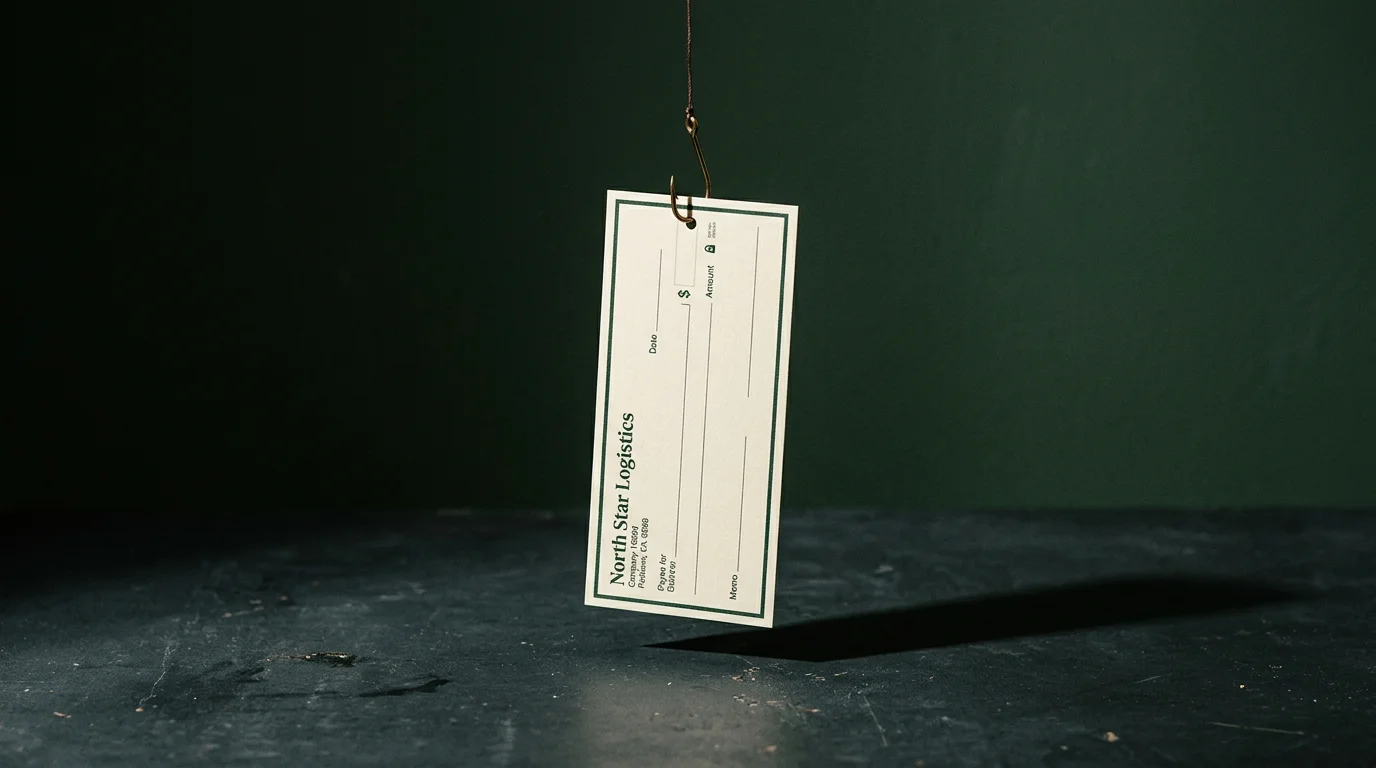
Two weeks ago, a request for a proposal landed in my inbox out of nowhere. Someone starting a catering company looking for a high quality 10+ page website.
I've been grinding on SEO for months and I'm still sitting on page 2+, so an inbound asking me to bid on a project felt like a turning point. I had just put real money into citations, and I figured this was the first sign of that paying off. So I did what I do. I wrote a proposal.
Most shops, when a business asks for a website, send back a proposal for a website. I sent back something else. The website was one piece of a plan for their whole business tech stack. That is the entire pitch of a tech concierge, and I leaned into it.
And I won. First organic client. First RFP I had ever competed for. I was thrilled.
Then it fell apart. Here is exactly how, including the flags I told myself were nothing, so the you can hopefullly spot it faster than I did.
The deal
They signed the agreement and told me a cashier's check was in the mail.
I'd have preferred Zelle, but a check also avoids the transaction fee. I've worked with checks before, and I spent time as a bank teller, so I'm confident I can tell a forged check from a real one. The agreement also said no work starts until the check clears. So no real exposure, right? If there was a flag there, it was the faintest shade of yellow.
The first yellow flag
After signing, I tried to set up a quick call. Meet and greet, talk through the project, put a face to the name. James told me he'd just had a nose procedure and his doctor told him to stay off calls.
Odd, but people have surgeries. I wished him well and figured we'd connect once the check cleared. Yellow flag, filed away.
The red flag
About a week later, four days after the check was supposedly mailed, the real ask showed up. Here is the part that matters, in their words:
Since our project consultant is coordinating the design assets, brand materials, and ongoing product guidance that directly supports the development phase, we were considering consolidating the consultant's coordination fee of $2,850 into the same payment issued for the milestone.
From an administrative standpoint, issuing a single payment allows us to streamline accounting, reduce multiple approvals internally, and keep all project-related expenses aligned under the same development milestone. It also ensures that the consultant's coordination work remains fully synchronized with your team's delivery schedule.
Of course, the consultant portion would be clearly itemized for transparency, and we would provide any breakdown your accounts team may require for record-keeping.
Read it again. No urgency, no broken English, no typos. It's calm and professional and it uses the word transparency without blinking. That is the point. The tone is built to disarm you so you don't look too hard at the only thing it's actually asking, which is that I pay their consultant out of money they're sending me.
That is the overpayment scam, full stop.
Here is the mechanic if you haven't seen it. The check is fake or it will bounce. Before it bounces, they get you to forward part of the money to a third party, their "consultant," who is either them or an accomplice. You send real money. Days later your bank claws back the bad check. You're out whatever you forwarded, and they're gone.
No real business streamlines its accounting by having a brand new vendor pay its other vendors. That is not a thing. The second I read it, I voided the agreement.
On sunk cost
It stung. Two weeks and hours of proposal work for nothing.
I was an econ major, and the sunk cost fallacy is one of the few things from that degree I use constantly. The time was already gone. Throwing good effort after it to salvage a deal that was never real would only have cost me more. So I walked.
The flags I only saw afterward
Once I knew what I was looking at, I went back through everything.
The email came from a consultancy with no connection to anything we had discussed. I'd glossed right over that.
They never gave me their LLC name up front. It only came out after they had accepted the proposal I'd spent hours on. So I looked it up. The LLC was registered in Texas, which matched where they said they were. But the registered email wasn't the one they'd used with me, the name James appeared nowhere on the filing, and the business on record was an Indian grocery store. Not a catering company.
What I'd do differently
A handful of things I'm now baking into how I handle inbound:
- Ask how they found you, early. A real answer like a referral or a Google search tells you something. A vague non-answer tells you more.
- Get the legal entity name before you invest real time. If a prospect won't say who they actually are until after you've done the work, that is the tell, and I missed it.
- Run the entity through the Secretary of State. Once you have the LLC name, the state it's registered in has a free public lookup. Two minutes confirms whether the business is what they claim to be.
- Don't take checks from people you don't know and trust. "It won't clear until it clears" feels like protection. It isn't, when the whole scam is built around the float and getting you to forward money before the bank catches up.
- Treat a hard refusal to ever get on a call as a bigger flag than I did. One declined call is nothing. A consistent pattern of staying off video and phone while a check is in the mail is a different signal.
The actual cost
I didn't lose a dollar. The agreement protected me, and I caught the ask before I forwarded anything.
What it cost was time, and a little of the high of thinking I'd landed my first organic win. If writing this saves one other small operator the hours on a dead proposal and the gut punch when it evaporates, that's a fair trade.
If you run a small shop and an inbound deal feels a little too perfect, slow down and run the checks. The real ones hold up to scrutiny. The fake ones fall apart the second you look.