
I keep relearning the same lesson. You get what you pay for.
Here's the version of it that actually stuck with me: a year from now, you won't remember what you paid. You'll remember whether the work was any good.
Think about the last service you hired. Not a product on a shelf, a service, with an actual person doing the work. There's a different texture to it. You're not buying a thing, you're trusting someone to do a thing right, and you find out how that went long after the invoice is paid.
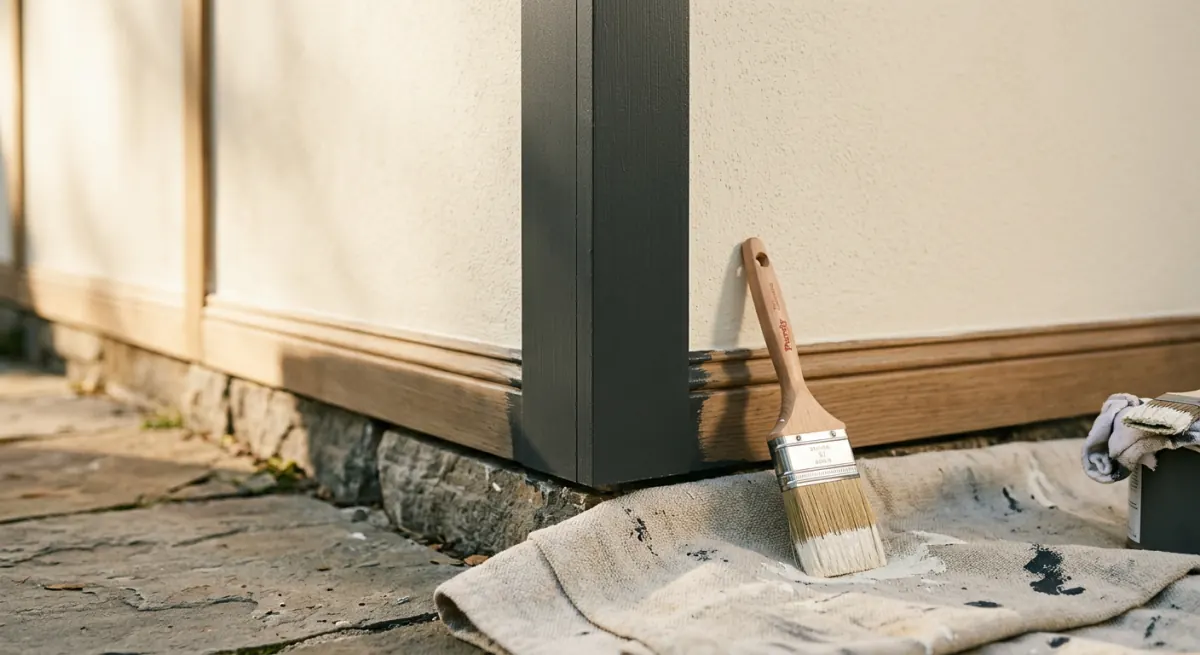
For us, the clearest example is the guy who painted the outside of our house.
He was double. Not ten percent more, not a little pricey. Double the next-highest bid we got. Everyone told us we were crazy. "You're paying that much for paint?" And on paper, sure, it looked insane. Paint is paint.
We hired him anyway. And we will never use another painter again.
He was the most careful contractor we've ever worked with, and the part that surprised me most is that we almost never think about what we spent. That number evaporated. What stuck around is how good the work was, to the point that he's become the yardstick. Every service professional we hire now gets quietly measured against the painter.
That's the whole thing, really. The price is a moment. The quality is the memory.
We didn't hire him because he was the most expensive. We hired him because he could tell us exactly why he was the most expensive.
He did things no one else was going to do. He dug down six inches around the whole house so there'd be no unpainted border at the bottom. He took every fixture and shutter off the walls and painted behind them instead of taping around them. He told us he'd come back for any spot he missed or anything that needed cleaning up, and he meant it. He kept finding ways to do the job better while he was in the middle of doing it. He had real professional opinions, so we got to lean on his experience instead of guessing at our own. And he kept detailed notes on every material the job used and passed all of it through at cost, which came out to half what we'd have paid sourcing it ourselves.
None of that was in the other bids. Not because the other painters couldn't have done some of it, but because not one of them could explain what they'd do or why it mattered. By the end we weren't paying for "expensive." We were paying for the one person who'd obviously thought about every inch of the job. The price just reflected that.
That's the other half of this, though, the half that makes cheap so tempting. Nothing bad happens the day you sign with the low bid. The savings are real and immediate. The cost isn't. It shows up on a delay, once you're living with what you actually bought, which is exactly why it's so easy to talk yourself into.
I see the exact same pattern in my own line of work, and I see it constantly.
There are a million people who can build you a website. Same as there are a million painters, a million roofers, a million of every kind of service pro. I'm one of them. And I'll say plainly: I'm not the cheapest. I don't charge agency rates either, but you can absolutely find someone who'll do it for less than I will. That's always true.
What you're paying for isn't the existence of a website. Anyone can produce one of those. You're paying for whether it works, whether it's done right, and whether you'll be embarrassed by it in eighteen months.
I got a close look at the other end of that spectrum recently. I was putting together a proposal for a company, and part of that was going through their current website. It was immediately, painfully obvious they'd hired the cheapest option.
I'll keep the details vague to be kind, but I'm not exaggerating any of this.
Their ROC number was misspelled. For anyone outside Arizona, that's the Registrar of Contractors license number, the thing that proves you're a legitimate licensed contractor. It's a three-letter acronym. It sat on their site as "RROC," and I genuinely don't know how you get that wrong. You'd have to work at it. But there it was, the one credential that's supposed to signal "we're the real deal," fumbled on the way out the door.
Their FAQ section on the homepage was the real showstopper. The "frequently asked questions" were the flavor of thing you get when nobody writes them and nobody reads them afterward. Picture something like:
Q: How to make roof service more better for all customer need?
A: Company is committed to providing roofing solution that exceed expectation while delivering quality roofing solution that exceed the expectation of customer roofing need.
Nobody has ever asked that question. It's barely English. The answer eats its own tail halfway through and just restates itself. It's filler someone pasted in and never looked at again, which is the whole point: nobody ever looked at it again.
Their blog was placeholder posts that had nothing to do with their business. And the site's largest content took more than twenty seconds to appear on a phone. Twenty seconds. That's the measure of how long a visitor stares at a mostly-blank screen before the main image or text finally loads. On mobile, where most people find a local business now, you have a couple of seconds before they leave. This site was asking for twenty.
And here's the part that stuck with me. This isn't a hobby. It's a real, legitimate service business with real customers, and they're planning to scale nationally.
They're going to take all of that, the fumbled license number, the nonsense FAQ, the blank twenty-second screen, and pour marketing money into pointing more people at it.
I don't tell that story to dunk on them. They didn't set out to buy a broken website. Nobody does. They made the same call we almost made with the painter: the work all looks the same from the outside, so take the cheap one, it doesn't matter.
But it's their storefront. It's the first thing a customer sees. And they won't feel the cost of that decision as a line item. They'll feel it as customers who bounced, calls that never came, a brand that quietly looks less trustworthy than the competitor down the road who spent a little more.
The bill for cheap always comes. It just doesn't come itemized, and it rarely comes on time.
I still catch myself reaching for the lowest bidder on things I don't think matter. Everyone does. It's the natural default. But I've started asking a better question before I do it: a year from now, am I going to remember what I saved? Or am I going to remember what I got?
The painter answered that for me. I don't remember the number. I remember the house.